
In modern manufacturing and testing facilities, relying on manual data logging is a massive risk. For instance, a single incorrect entry in an Excel sheet can lead to catastrophic machine failures. Consequently, industries face unnoticed defects and expensive production downtime.
To eliminate guesswork and achieve 100% quality control, modern factories now rely on automated Data Acquisition Systems (DAQ). Therefore, we have created this quick 3-minute guide to help you understand DAQ architecture and its industrial importance.
What is a DAQ Data Acquisition System?
Primarily, a Data Acquisition System (DAQ) is a integrated hardware and software solution. It automatically measures physical or electrical parameters from an industrial environment. Then, the system converts them into readable digital signals and logs them for real-time analysis.
Instead of manual tracking, a custom DAQ system measures critical variables—such as temperature, pressure, force, and voltage. Furthermore, it tracks these parameters thousands of times per second with absolute accuracy.
How Does an Industrial DAQ System Work? (3 Core Steps)
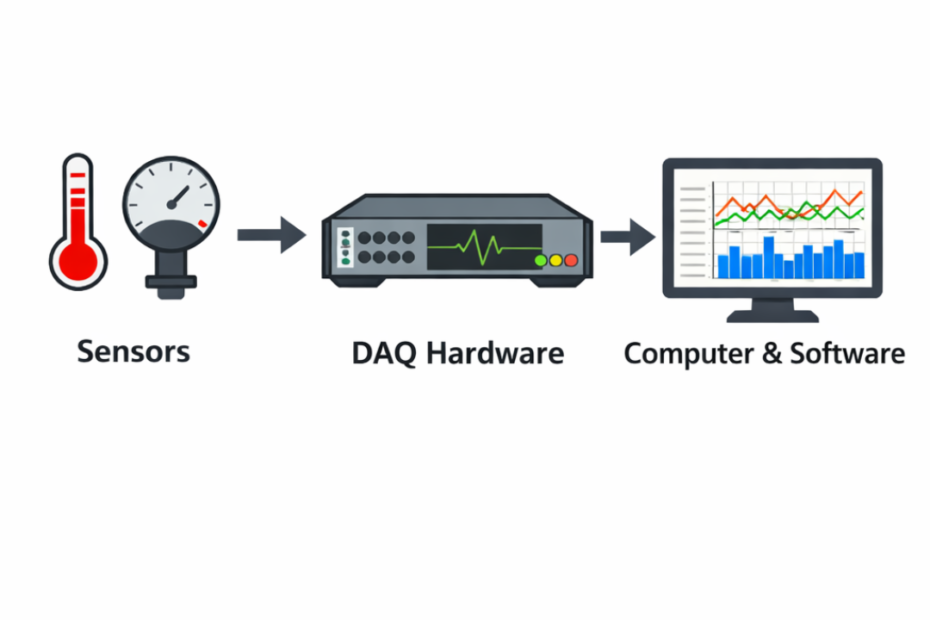
An industrial-grade DAQ setup relies on a seamless 3-step workflow to convert real-world physical changes into actionable data:
- Sensors & Transducers (Input): First, these devices convert physical phenomena into proportional electrical signals. Common examples include Thermocouples (temperature), Pressure Transducers (fluid line pressure), and Load Cells (force/weight).
- DAQ Hardware (Processing): Next, the hardware processes these raw signals, which are often weak and full of factory noise. Specifically, it cleans and amplifies the signals through Signal Conditioning. After that, an Analog-to-Digital Converter (ADC) transforms the continuous analog voltages into digital data.
- DAQ Software & Analytics (Output): Finally, the digital data is fed into specialized software running on an industrial PC or HMI. This software provides engineering teams with a unified control panel to visualize live trends and configure safety alarms.
Why Modern Factories Need Custom DAQ Solutions
Implementing an automated data acquisition framework directly impacts your plant’s bottom line. Here are the key reasons why you need it:
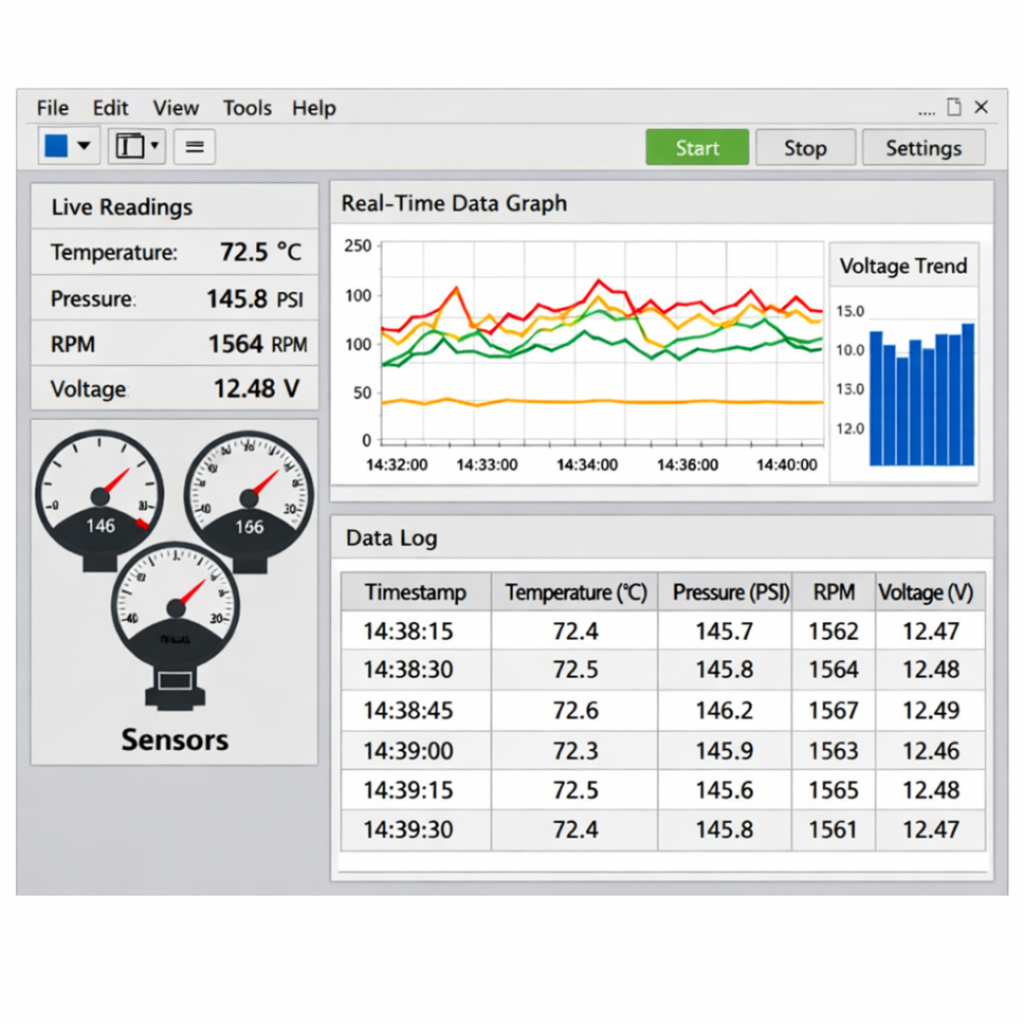
- Real-Time Monitoring: To begin with, you can track critical variables like Temperature (°C), Pressure (PSI), Motor RPM, and Voltage (V) simultaneously on a single dashboard screen.
- Predictive Maintenance: In addition, if a machine’s RPM drops or temperature spikes beyond a safe threshold, the software triggers immediate automated alarms. As a result, you can prevent sudden and costly breakdowns.
- 100% Production Traceability: Moreover, it creates a permanent, foolproof digital log of every batch or component tested. Thus, it ensures strict compliance with international quality standards.
- Zero Human Error: Most importantly, automated logging ensures absolute data integrity for critical quality audits.
Conclusion
In conclusion, a DAQ system is the fundamental building block of Industry 4.0 and smart manufacturing. By replacing legacy, manual workflows with automated data acquisition, you protect your critical machinery. Ultimately, this guarantees flawless quality for your clients.
Need a Tailored DAQ Solution for Your Plant? From selecting the right industrial sensors to developing custom dashboard software, Puja Controls specializes in designing end-to-end industrial automation, test, and measurement solutions.
[Contact our engineering experts today] to discuss your project requirements!